Most IT businesses going into 2026 don’t have a strategy problem. They have an execution problem.
The boardroom plans look solid: AI-integrated security, cloud-native infrastructure and growth targets that make sense on paper. But somewhere between the strategy deck and the operational floor, things fall apart. Margins tighten. Complexity compounds. And teams end up busier than ever without the results to show for it.
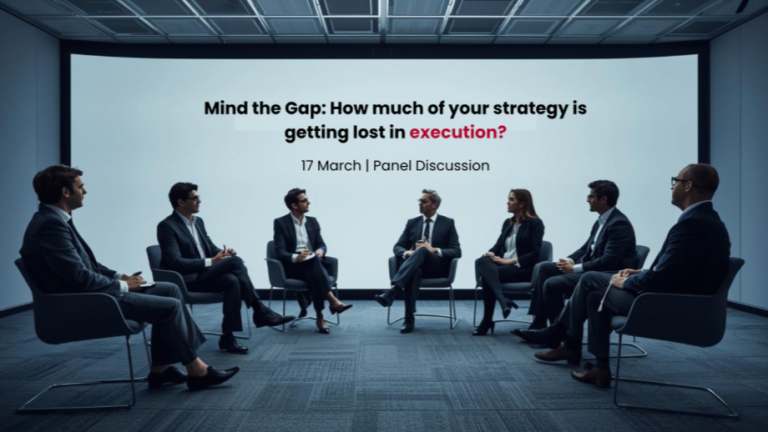
We recently brought together three leaders who’ve navigated this firsthand: Dale Hurwitz from Altitude Sync, Steve Porter from Larasoft and Norman Annette from IQ Business for a candid panel conversation on where IT businesses are getting stuck and what it takes to bridge that gap.
Prefer to watch the full conversation? Catch the recording here.
Stop Customising Everything – It’s Killing Your Scalability
Norman Annette made a point that probably landed uncomfortably for a few people in the room: the things most IT businesses call “being customer-centric” are actually just chaos with a friendly name.
If you onboard “Client A” with one set of tools and “Client B” with another, you aren’t just being flexible; you are building a mountain of technical debt. That variance, different tools, different setups, different everything, is what make you impossible to scale. It’s not flexibility; it’s technical debt with a customer-centric label slapped on top. True scalability requires a McDonald’s-like commitment to repeatability. As Norman noted, standardisation isn’t about removing quality; it’s about creating a robust foundation so that your “Trusted Advisor” status is built on your expertise, not on fixing unique, manual errors.
The Executive Pivot: Audit your service delivery. If you can’t replicate how you deliver a solution, you don’t have a service; you have a series of one-off projects. That’s not scalable and it’s not sellable.
You’re Getting Busier, Not Bigger – Here’s Why
Steve Porter raised a critical point regarding the “Missing Middle”, the SME and mid-market integration space. The real problem isn’t that businesses are targeting the wrong clients; it’s that they’re not honestly measuring the effort it takes to serve them. When the energy required to close and deliver a low-margin deal is the same as a high-value one, growth just means more work, not more profit.
In 2026, the energy required to sell and implement a low-value, high-friction product is often the same as that for a high-value, high-impact solution. If your margins are tightening as you scale, you aren’t growing; you’re simply getting busier. Profitable scaling requires a ruthless assessment of your solution stack.
The Executive Pivot: The question Steve put to the room was blunt: are you spending the same energy on a R10 outcome as a R10,000 one? If the answer is yes, your growth strategy isn’t working; you’re just running faster on the same treadmill.
Automate the Boring Stuff. Save the Human Moments for When They Actually Count
The conversation around automation in IT services tends to go straight to headcount reduction. But that’s not what came out of this panel. In a landscape where security audits (like 365) are high-frequency but low-impact for the client relationship, automation is a necessity. “Nobody wants to talk to you about an audit” was the sentiment; they just want it done. That’s not a relationship-building conversation; it’s admin. Automate it and you free your team up for the onboarding call, the quarterly review and the moment a client is deciding whether to expand their contract or look elsewhere. That’s where human presence pays off.
The Executive Pivot: Automate the mundane to elevate the human. Use technology to buy your team the time they need to have high-value, trust-building conversations with your partners.
Know When to Kill a Strategy Before It Kills Your Margins
Dale Hurwitz made the point that often gets skipped over in strategy conversations: knowing when to quit.
A strategy created six months ago may be irrelevant today. True agility is the ability to recognise when a project is no longer serving the business and extract yourself before it drains more resources. The businesses that do this well tend to have one thing in common: partners who’ll tell them the truth. Not yes-people, but people who’ll flag when a project is draining resources without delivering return before it becomes an expensive lesson.
The Honest Takeaway
None of what came out of this panel was particularly comfortable. Standardise more. Scrutinise your solution stack. Automate ruthlessly. And be willing to pull the plug on strategies that aren’t working, even when you’ve already invested in them.
But the thread running through all of it was this: execution doesn’t fail because the strategy was wrong. It fails because the systems, the partnerships and the discipline to deliver consistently weren’t in place.
If any of this resonates with where your business is right now, we’d love to continue the conversation. Get in touch with Altitude Sync or keep an eye on our upcoming sessions where we dig into these topics with the people living them.